


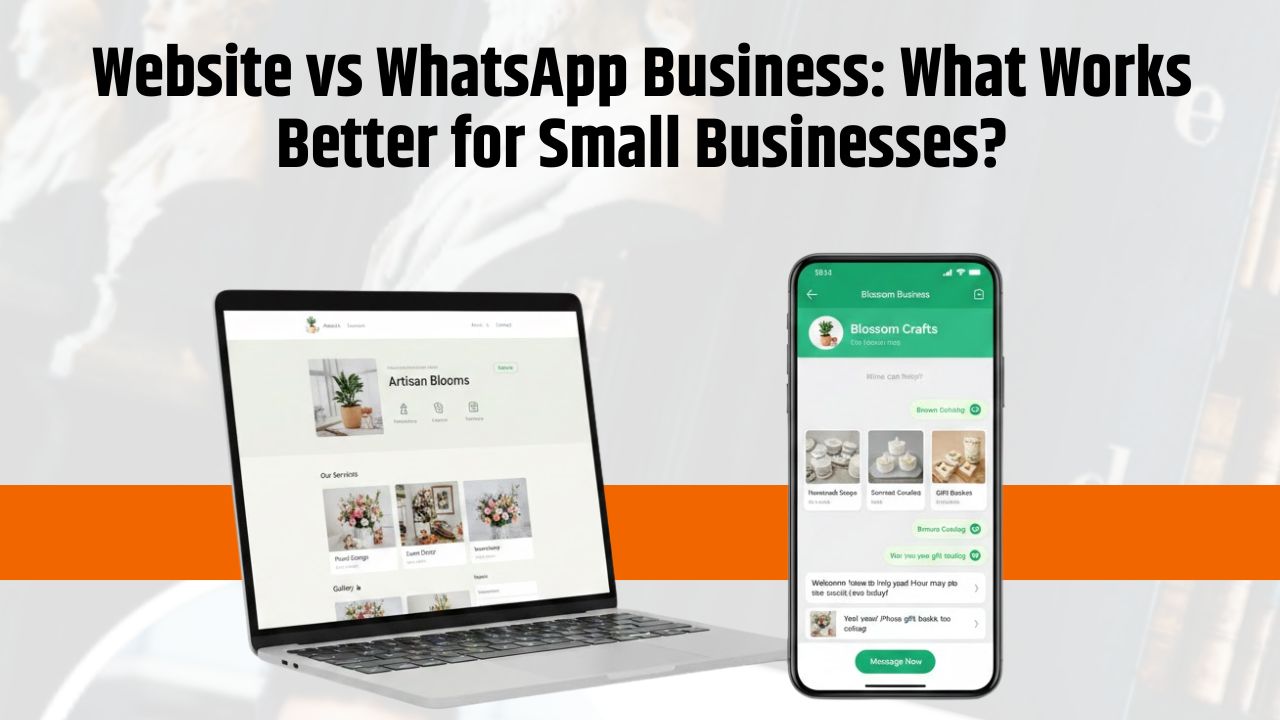
Many small businesses today depend heavily on WhatsApp Business for customer communication. It feels simple, familiar, and direct. Customers message, businesses reply, and conversations move quickly. Because of this convenience, many business owners start believing that WhatsApp alone is enough to manage their online presence.
However, as customer behaviour evolves, businesses begin to notice limitations. Customers often want more than just chat replies—they look for clear service details, credibility, and reassurance before starting a conversation. This is where the comparison between a website and WhatsApp Business naturally arises.
Both tools are valuable, but they are built for different purposes. WhatsApp focuses on communication, while a website focuses on information, visibility, and trust. This blog explains how each works, where each falls short, and how small businesses can use them wisely instead of choosing one blindly.
Why WhatsApp Business Is Popular Among Small Businesses
WhatsApp Business has become a preferred tool for small businesses for good reasons. It is:
For day-to-day conversations, follow-ups, and customer support, it works extremely well. It reduces response time and keeps communication personal, which is why so many small businesses rely on it.
While WhatsApp Business is useful, using it as the only digital presence has clear limitations.
Some common challenges include:
Customers who want to quickly understand what a business does often struggle when information is scattered across chats. This can lead to missed opportunities, especially with new or first-time customers.
A business website serves a very different role. It acts as a central place where all important information lives in an organised manner.
A website allows businesses to:
Unlike chat-based communication, a website works passively—informing and building trust even when the business owner is offline.
When comparing the two, the differences become clear in daily use.
Both tools are useful, but they solve different problems.
For most small businesses, the best approach is not choosing one—but using both together.
A website helps:
WhatsApp helps:
When used together, the website attracts and informs, while WhatsApp engages and converts. This balance reduces repetitive questions and improves customer experience.
One reason businesses avoid websites is the fear of complexity. That fear is outdated.
Today’s tools offer:
Many owners now choose the website builder for small business needs to go live quickly and manage everything themselves, without relying on developers.
DigiBCard works as both a digital card and a mini website, making it easier for small businesses to manage online presence and sharing together.
With it, businesses can:
This approach complements WhatsApp sharing perfectly. Instead of explaining everything repeatedly on chat, businesses can simply share one link that covers all essential information.
WhatsApp Business and websites are not competitors—they are complementary tools. WhatsApp is excellent for communication, while a website builds trust, visibility, and credibility. Relying on only one limits a business’s potential.
In today’s digital environment, customers expect both easy communication and clear information. A combined approach allows small businesses to stay accessible while also looking professional and reliable. By using the right tools together, businesses can simplify communication, improve trust, and prepare themselves for long-term growth.
Combining a simple website with everyday communication tools can help small businesses build trust and stay connected with customers.

Top 10 Reasons to Switch to Digital Business Card

How to Design Digital Business Cards In 4 Easy Steps

Transform Your Networking with a Personalized Digital Business Card

Top 5 Platforms to Set Up Your Digital Store Easily
