


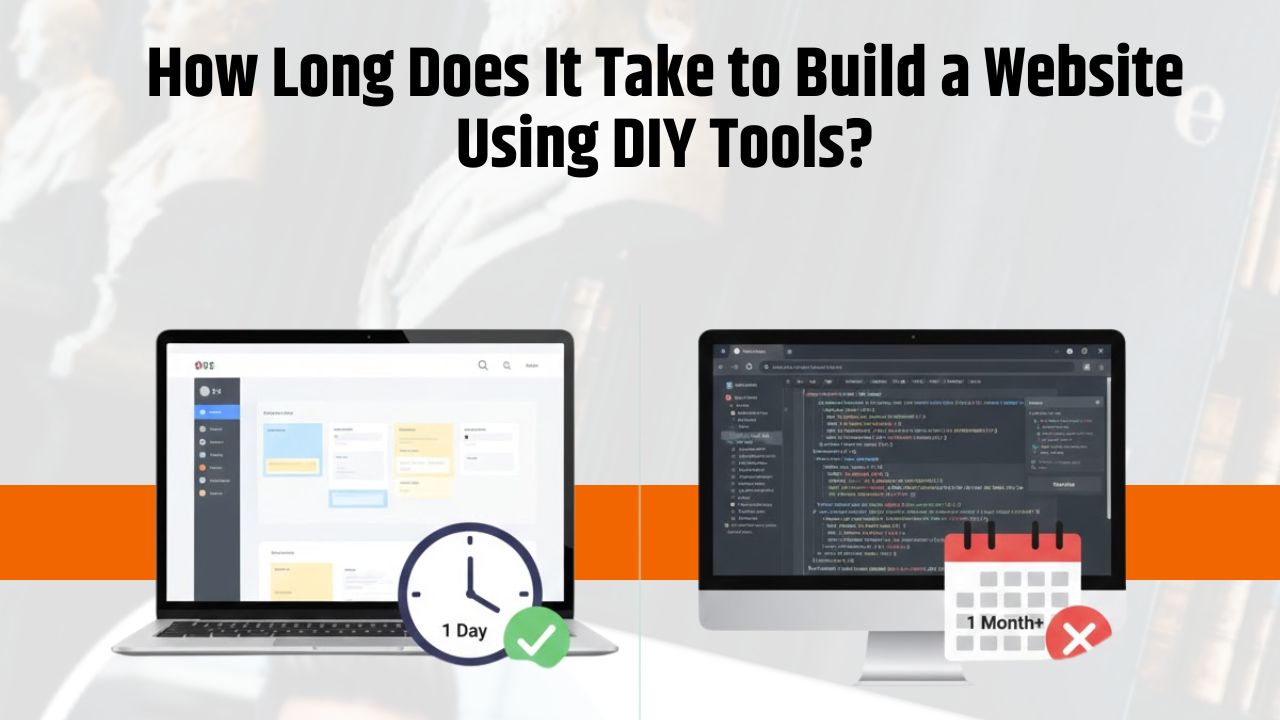
Many business owners delay building a website because they assume it will take weeks of planning, coordination, and technical effort. This belief often comes from older experiences where websites were built through developers, long discussions, and multiple rounds of changes. For small businesses, time is a major concern, and anything that feels time-consuming automatically moves to the “later” list.
The reality today is very different. With modern DIY website tools, creating a website is no longer a long or complicated process. In fact, many websites can now be built and published in the same day—sometimes in just a few hours.
This blog explains why website creation used to feel slow, what actually affects the time required today, and how DIY website builders have removed most delays. If time has been the main reason holding you back, this guide will help you understand what to realistically expect and why speed is no longer a barrier.
The idea that website building takes a long time comes from how things worked earlier.
Common reasons include:
This mindset isn’t wrong—it’s based on older processes. What has changed is the availability of tools that eliminate most of these steps. The delay was never about building a website; it was about how it was built.
Today, website creation time depends far more on preparation than technical skill.
Key factors include:
In most cases, the tool matters more than the user’s experience. With the right platform, even someone with no technical background can build a website faster than a skilled developer using traditional methods.
DIY website builders are designed specifically to remove delays.
They save time by offering:
This allows business owners to focus on content and messaging, while the platform handles design, responsiveness, and technical setup automatically.
With modern DIY tools, website creation usually falls into these ranges:
Compared to traditional development timelines, this is significantly faster and far more practical for small businesses that want quick online visibility.
Having basic information ready makes the process even faster. Before starting, it helps to prepare:
With this content available, building the website becomes a simple step-by-step task rather than a planning exercise.
Yes. DIY website tools are created for non-technical users, including first-time website builders.
These platforms guide users through each step and remove the need to understand design or development concepts. Beginners can focus entirely on content while the tool manages layout, formatting, and publishing in the background.
Not all platforms are equally simple. Choosing the right one can significantly reduce creation time.
Time-efficient platforms usually offer:
Many businesses prefer using a DIY website builder that is designed for quick setup and local business needs, helping them go online without unnecessary complexity.
DigiBCard works as both a digital card and a mini website, making it a time-saving option for small businesses.
With it, businesses can:
By combining website creation and digital sharing in one place, it removes extra steps and helps businesses go online and start sharing almost instantly.
Building a website no longer requires weeks of planning or technical involvement. With DIY tools, speed is now determined by how quickly you prepare your content—not by technical limitations. Even first-time users can create and publish a website in hours instead of weeks.
For small businesses, this means there is no longer a reason to delay going online. Time is no longer a barrier, and fear of complexity is outdated. With the right tools, building a website is fast, manageable, and entirely within your control.
Building a website no longer requires weeks of planning. With the right tools, businesses can go online quickly and confidently.

Top 10 Reasons to Switch to Digital Business Card

How to Design Digital Business Cards In 4 Easy Steps

Transform Your Networking with a Personalized Digital Business Card

Top 5 Platforms to Set Up Your Digital Store Easily
