


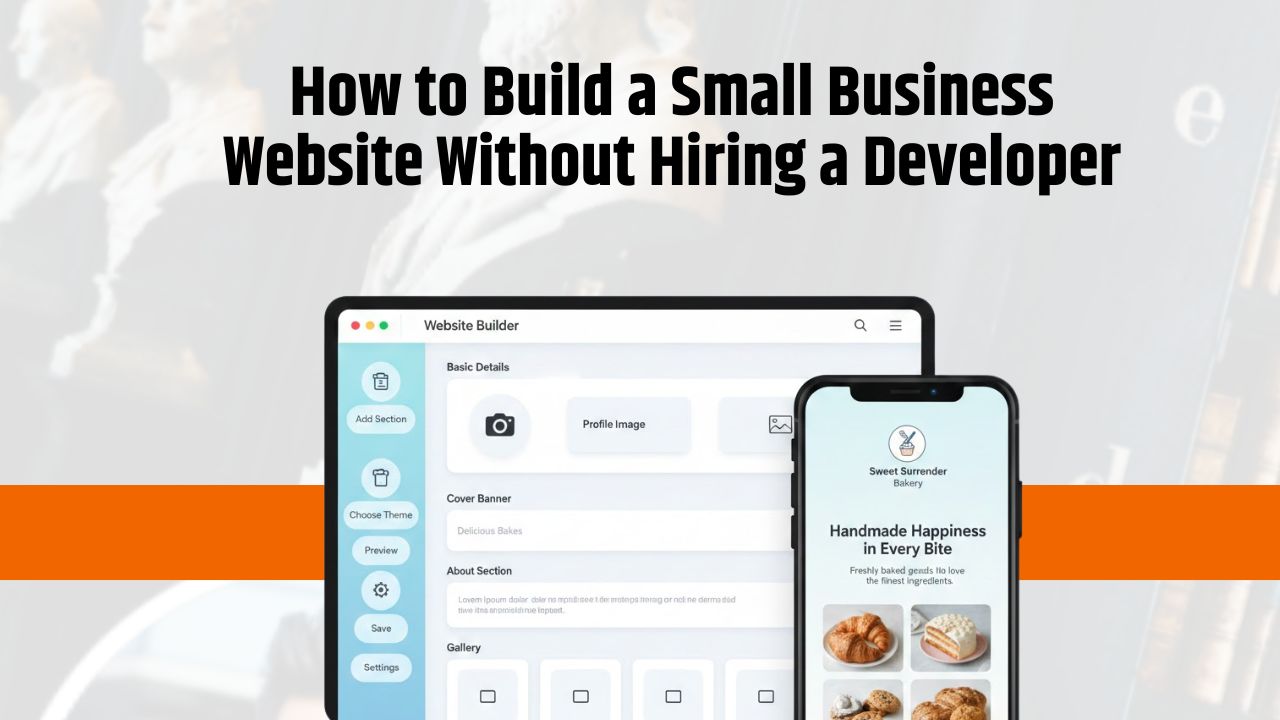
Building a website once meant dealing with developers, technical jargon, and high costs. Today, that reality has completely changed. Small business owners, freelancers, and service providers can now create professional websites on their own—without writing a single line of code. The key lies in understanding the process, choosing the right tools, and focusing on clarity rather than complexity.
This guide walks you step by step through how to build a small business website without hiring a developer, while keeping it practical, affordable, and easy to manage.
Customer behaviour has shifted permanently online. Before calling, visiting, or buying, people search. They look for information, reviews, services, pricing cues, and contact details. If your business does not appear online with a clear presence, you risk losing trust before the first interaction even happens.
A website helps in multiple ways:
For small businesses, a website is no longer an “extra.” It is a basic digital asset that supports growth, trust, and customer confidence.
Many business owners delay building a website because of outdated assumptions. Let’s clear them up.
You need coding knowledge
Modern website builders are designed for non-technical users. Everything works visually, with simple editing tools.
Websites are expensive
You no longer need large budgets. Many platforms offer affordable yearly plans that include hosting, templates, and tools.
Maintenance is complicated
Most updates involve changing text, images, or links—tasks that take minutes, not hours.
Only large businesses need websites
In reality, small businesses benefit the most. A simple website levels the playing field and makes you discoverable.
Before choosing any platform or design, decide why you want a website. Your goal determines the structure, pages, and tools you need.
Common website goals include:
A business focused on enquiries may need fewer pages but stronger calls-to-action. A service provider may focus on credibility and contact options. Clear goals prevent unnecessary features and confusion later.
Website builders allow you to create pages using drag-and-drop tools instead of code. The right builder makes the entire process smoother.
Popular builder types include:
When selecting a builder, ensure it offers:
A good builder reduces technical dependency and gives you confidence to manage the site yourself.
Your domain name is your digital identity. It should be simple, memorable, and aligned with your business name or service.
Tips for choosing a good domain:
Most modern website builders include hosting along with the domain, which removes the need to manage servers or technical configurations.
Templates give your website a professional structure from day one. Instead of starting from scratch, you customise an existing layout.
Choose templates that are:
Simple layouts perform better than flashy designs. Readability, spacing, and clarity matter more than visual overload.
Every small business website should cover basic information clearly and quickly.
Your home page should immediately answer:
Include a clear value proposition and a strong call-to-action.
This page builds trust. Share your story, experience, values, and purpose. Authenticity matters more than formal language.
Explain what you offer in simple terms. Focus on benefits, outcomes, and solutions—not just features.
Make it easy to reach you. Include:
Most users browse websites on mobile devices. A site that works well only on desktop will lose attention quickly.
Modern builders automatically optimise layouts for mobile screens. Still, you should:
Fast loading and smooth scrolling directly impact user experience.
Search visibility starts with simple SEO setup. You don’t need advanced techniques to begin.
Focus on:
These small steps help search engines understand your website better and improve discoverability.
A website should support interaction, not just display information.
Useful tools include:
Choose tools that support your business goal without overwhelming visitors.
Before going live:
A short testing phase prevents common mistakes and improves first impressions.
One of the biggest advantages of no-code websites is easy maintenance.
You can:
Regular updates improve trust and keep your website relevant.
For small businesses, this approach is both practical and sustainable.
Simplicity and clarity always perform better.
Building a small business website without hiring a developer is not only possible—it is practical in today’s digital environment. With clear goals, the right tools, and a structured approach, any business owner can create a professional online presence that supports visibility, trust, and growth. The focus should always remain on usability, clarity, and customer experience rather than technical perfection.
A modern alternative to traditional websites is DigiBCard, which is not just a digital visiting card. It works like a mini website designed specifically for small businesses and service providers.
With it, users can:
It combines a website and digital card into one simple, manageable platform—ideal for small businesses, freelancers, and professionals who want an online presence without technical stress.
Ready to launch your small business website without complexity?
Choose a simple, no-code website builder and take full control of your digital presence. Start building today and get your business online in minutes.

Top 10 Reasons to Switch to Digital Business Card

How to Design Digital Business Cards In 4 Easy Steps

Transform Your Networking with a Personalized Digital Business Card

Top 5 Platforms to Set Up Your Digital Store Easily
