


In today’s digital-first world, having an online presence is no longer optional for small businesses in India. Customers now search online before visiting a store, calling a service provider, or making a purchase decision. Whether it’s a local shop, a consultant, or a growing startup, a website acts as the first point of trust.
However, many business owners hesitate to go online due to one major concern — cost. There is a common belief that building a professional website always requires a large budget, technical knowledge, and ongoing expenses. This assumption often delays or completely stops small businesses from taking their first digital step.
The reality is very different. Today, multiple low-budget website options exist, each suited to different business needs, skill levels, and growth plans. From simple DIY tools to smart mini-sites, affordable choices are available without compromising essentials. This article breaks down practical and cost-effective website options that small businesses can confidently choose from.
A website delivers value far beyond just an online presence, even for businesses operating with limited resources.
It builds credibility and trust, as customers are more likely to trust a business that has an official online page with clear details. A website also helps customers find you through search engines, especially when they are actively looking for nearby services.
Your website works as a 24/7 information hub, answering common questions about services, pricing, location, and timings without constant phone calls. It also supports lead generation through enquiry forms, call buttons, and messaging links.
Having your own website reduces dependency on marketplaces and social media platforms, where visibility can change due to algorithms or policy updates. Additionally, a website improves local visibility, helping nearby customers discover and contact your business easily.
Budget-friendly does not mean cutting corners on essentials. A low-cost website should still meet certain minimum standards to be effective and safe.
It must have a mobile-friendly design, as most Indian users browse on smartphones. Fast loading speed is critical to avoid visitors leaving immediately. Basic SEO readiness helps your website appear in search results.
The site should include contact and enquiry features so visitors can take action easily. You should also have the ability to update information without depending on developers for every small change.
Lastly, secure hosting is non-negotiable. A cheap website without these basics may look affordable initially but can harm credibility and growth in the long run.
DIY no-code website builders are ideal for beginners with minimal technical knowledge. These platforms use drag-and-drop editors, allowing users to build pages visually without writing code.
They offer quick setup, often enabling a website to go live within a few hours. Designs are template-based, which keeps costs low and structure simple. These tools are best suited for service businesses, consultants, and early-stage startups that need a basic online presence.
Pros include low upfront cost, ease of use, and minimal maintenance.
Limitations include restricted customization, limited scalability, and dependency on the platform’s features.
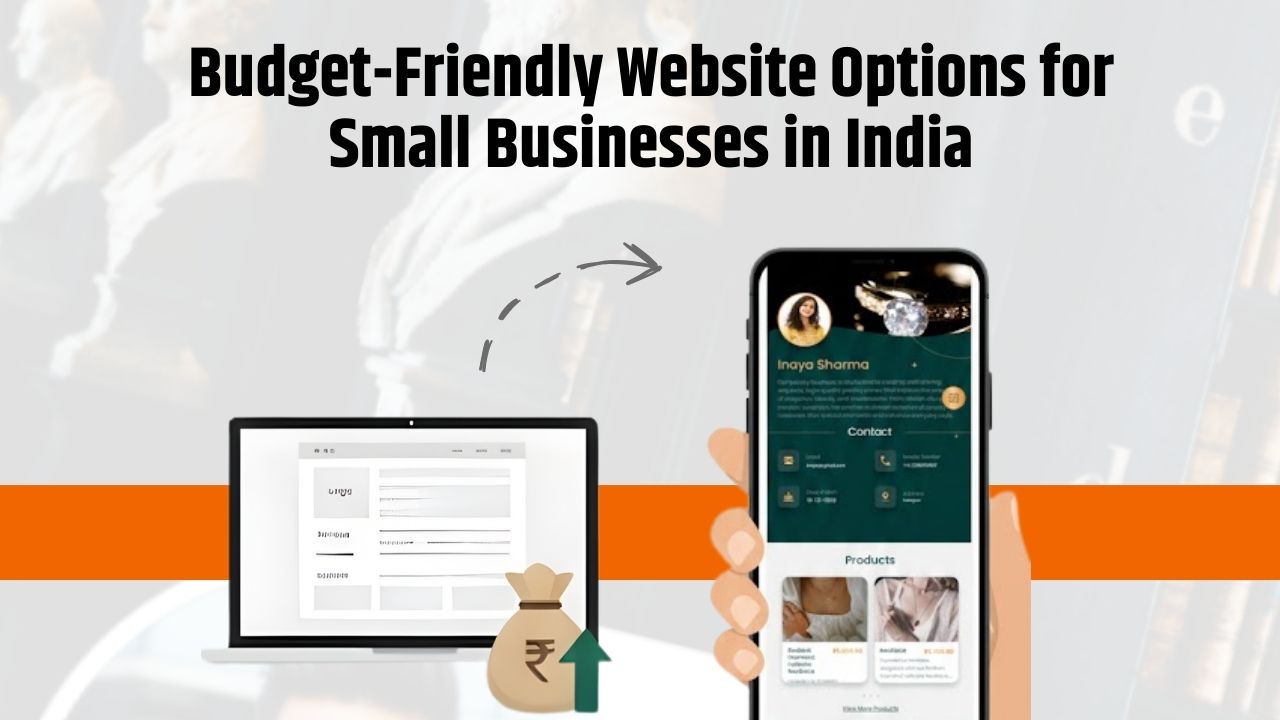
This option combines a professional contact profile with a lightweight website, creating a hybrid online presence. These solutions act as both a digital visiting card and a micro-site.
They usually come with very low setup cost and allow for quick launch. Built-in contact buttons such as call, message, email, and map navigation make it easy for customers to reach out instantly.
These solutions work especially well for professionals, freelancers, consultants, and local business owners who want a simple but effective digital presence. They are ideal for businesses taking their first step online without complexity or heavy investment.
A template-based WordPress website sits in the mid-range budget category. It uses pre-designed themes, which significantly reduce development costs compared to custom websites.
This approach offers greater flexibility in features, design, and content structure. It is also more scalable, allowing businesses to add blogs, landing pages, or ecommerce later.
However, it usually requires basic technical support for setup, hosting, and updates. This option is suitable for growing businesses that want more control and future expansion without starting from scratch.
Hiring a freelancer can make sense when you want a custom layout at a controlled cost. Freelancers are often hired for one-time setup projects, such as brochure-style websites.
To make this option work, the business owner must provide a clear scope, including number of pages, features, and timelines. The risk varies by provider quality, as skill levels and support commitment can differ.
This approach is best for simple websites with limited functionality and no frequent updates.
Website Type
Setup Cost Range
Time to Launch
Skill Required
Maintenance Effort
Scalability
Best Use Case
DIY No-Code Builders
Low
Very Fast
Minimal
Low
Limited
Beginners & startups
Smart Profile + Mini Site
Very Low
Instant
None
Very Low
Limited
Professionals & local businesses
WordPress Templates
Medium
Moderate
Basic technical
Medium
High
Growing businesses
Freelancer Built Site
Medium
Moderate
None (owner)
Depends
Medium
Simple brochure sites
Choosing the right option depends on several practical factors. Start with your business type — service-based, product-based, or professional practice.
Consider how quickly you need to launch. If speed is critical, simpler solutions work better. Define your budget range clearly to avoid overspending.
Think about how often you need to update information. If updates are frequent, choose a platform that allows self-editing. Also assess whether you need ecommerce features or just enquiry generation.
Finally, be honest about your technical comfort level. The best solution is one you can manage confidently.
One common mistake is choosing purely based on the lowest price, ignoring quality and long-term usability. Many businesses also neglect mobile optimization, losing a majority of potential visitors.
Another error is launching without enquiry or call-to-action buttons, which defeats the purpose of having a website. Skipping basic SEO setup makes the site invisible in search results.
Using slow or unreliable hosting can harm user experience, and not having update access creates dependency and delays.
Every affordable website should include a mobile-responsive layout that works smoothly across devices. Clear service or product information helps visitors understand what you offer.
A contact form or instant contact buttons ensure easy communication. Map and location details improve local reach and trust.
Basic SEO settings such as page titles and descriptions are essential for discoverability. Lastly, fast-loading pages keep visitors engaged and reduce bounce rates.
Small businesses in India do not need large budgets to establish an online presence. What they need is the right approach and the right tools. With multiple affordable website options available today, going online is more accessible than ever.
By choosing based on actual business needs rather than hype or assumptions, small business owners can launch professional, effective websites without heavy investment. A smart, well-planned low-budget website can deliver credibility, visibility, and growth.
DigiBCard helps small businesses go online with a combined website and smart digital visiting card — built for quick launch and low cost. Create a professional online presence, share your details instantly, capture leads, and update anytime from one dashboard.
Perfect for business owners who want maximum impact without heavy investment.
Start with DigiBCard and get your online presence live fast.

Top 10 Reasons to Switch to Digital Business Card

How to Design Digital Business Cards In 4 Easy Steps

Transform Your Networking with a Personalized Digital Business Card

Top 5 Platforms to Set Up Your Digital Store Easily
